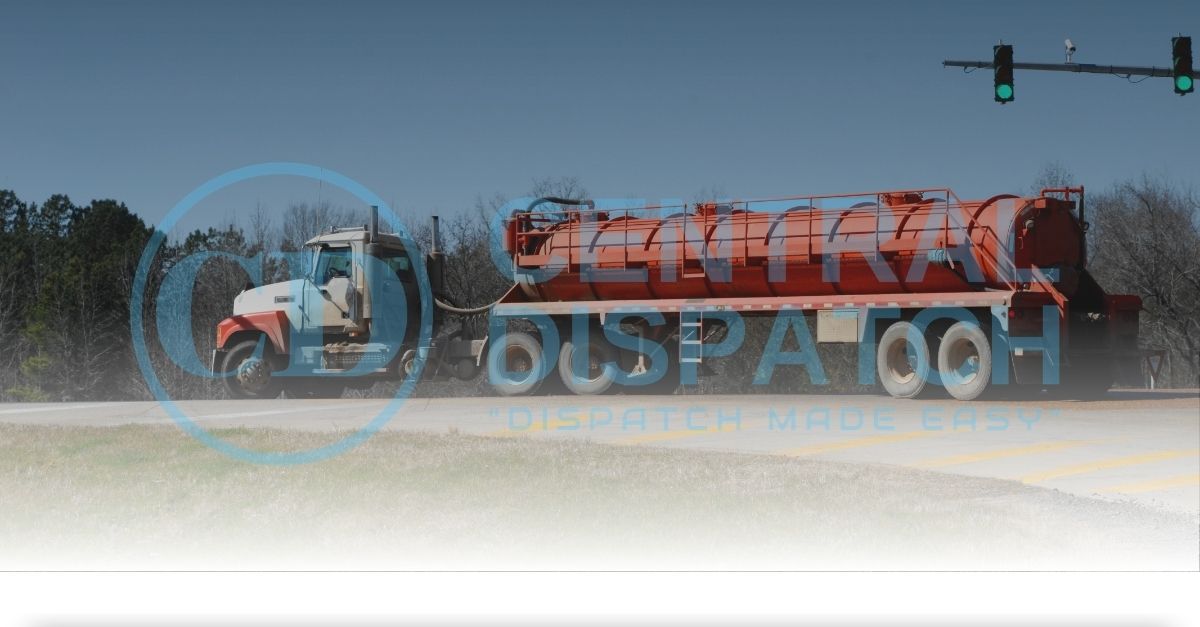
Short-haul oilfield trucking is designed for speed, repetition, and efficiency. Unlike long-haul transportation, where distance defines productivity, short-haul operations rely on completing multiple trips within a single shift, moving water, waste, sand, and materials between well sites, disposal facilities, and production locations.
On paper, it should be one of the most efficient segments of oilfield logistics.
In reality, it often isn’t.
Across many oilfield operations, short-haul trucking is quietly burdened by inefficiencies that reduce productivity, increase costs, and create unnecessary stress across dispatch, drivers, and field teams. These inefficiencies are not always obvious, but over time, they compound into significant operational losses.
“In oilfield trucking, inefficiency doesn’t come from distance; it comes from decisions.”
The Illusion of Simplicity
At first glance, short-haul trucking appears straightforward. Trucks move between nearby locations, routes are familiar, and load cycles are repetitive. This creates the assumption that operations should run smoothly with minimal disruption.
However, the reality is far more complex. Each trip depends on multiple variables aligning perfectly, site readiness, equipment functionality, disposal capacity, driver availability, and accurate dispatch coordination.
When even one of these elements is out of sync, the entire cycle is disrupted.
Unlike long-haul trucking, where delays may be absorbed over long distances, short-haul operations are tightly compressed. This means inefficiencies are felt immediately and repeatedly throughout the shift.
Dispatch Decisions Drive Everything
At the core of short-haul inefficiency is dispatch.
Every truck movement begins with a dispatch decision, where to send the truck, when to send it, and what load to prioritize. When dispatch operates without real-time operational visibility, these decisions are often based on assumptions rather than accurate data.
For example, a truck may be dispatched to a disposal site that appears available, only to arrive and find the site temporarily offline due to a pump issue or capacity limitation. The result is immediate idle time, driver frustration, and disruption to the rest of the schedule.
These small misalignments, repeated across multiple trucks and shifts, significantly reduce overall efficiency.
Waiting Is the Biggest Hidden Cost
One of the most significant inefficiencies in short-haul oilfield trucking is waiting time.
Waiting happens in multiple forms:
- Trucks arriving before a site is ready to receive loads
- Drivers queued at disposal facilities with limited capacity
- Delays caused by equipment downtime or operational interruptions
Each instance of waiting may seem minor in isolation. However, when multiplied across dozens of trucks and multiple shifts, the lost time becomes substantial.
The key issue is that waiting time is rarely tracked as aggressively as other metrics. Fuel, mileage, and load counts are measured carefully, but idle time often goes unnoticed, even though it directly impacts profitability.
Lack of Real-Time Visibility
A major contributor to inefficiency is the lack of real-time visibility into field conditions.
In many operations, dispatchers rely on delayed updates, phone calls, or assumptions to determine whether a site is ready. By the time accurate information is received, trucks may already be en route or waiting at the location.
Without integrated monitoring systems or real-time data feeds, dispatch becomes reactive rather than proactive. Instead of preventing delays, teams spend their time responding to them.
This gap between what is happening in the field and what dispatch knows is one of the biggest drivers of inefficiency.
Fragmented Communication
Short-haul oilfield trucking involves constant communication between dispatchers, drivers, field crews, and sometimes customers. When communication is unstructured or inconsistent, inefficiencies increase.
Drivers may receive incomplete instructions. Field teams may not be aware of incoming loads. Dispatchers may not receive timely updates about site conditions.
These communication gaps lead to misalignment, trucks arriving at the wrong time, loads being delayed, and operations falling out of sync.
In high-volume environments, even small communication breakdowns can have cascading effects.
The Impact of Operational Variability
Oilfield environments are inherently dynamic. Equipment can fail, weather can change, and production demands can shift quickly.
While variability cannot be eliminated, it can be managed more effectively.
In inefficient systems, variability disrupts because there are no mechanisms to adapt quickly. Dispatchers are forced to make last-minute changes, often without complete information, increasing the likelihood of errors.
Efficient operations, on the other hand, are designed to absorb variability, using better visibility, structured workflows, and faster communication.
Driver Experience and Performance
Inefficiency in short-haul trucking also affects drivers directly.
When drivers spend excessive time waiting or dealing with unclear instructions, their productivity decreases. Over time, this impacts morale, job satisfaction, and retention.
Drivers perform best in environments where:
- Instructions are clear
- Wait times are minimized
- Schedules are predictable
When these conditions are not met, performance declines, further reducing overall efficiency.
Why These Inefficiencies Persist
One of the reasons short-haul inefficiencies continue is that they are often normalized. Waiting times, delays, and miscommunication become part of the daily routine, rather than problems to be solved.
Because these issues are spread across multiple parts of the operation, their true impact is rarely measured in one place.
As a result, companies may underestimate how much inefficiency is affecting their bottom line.
Moving Toward More Efficient Operations
Improving short-haul oilfield trucking efficiency does not require completely overhauling operations. Instead, it starts with better alignment between dispatch decisions and real-time field conditions.
When dispatchers have access to accurate, timely information, they can make smarter decisions about when and where to send trucks. When communication is structured and consistent, coordination improves. When inefficiencies are measured and analyzed, they can be reduced over time.
The goal is not to eliminate variability; it is to manage it more effectively.
Final Thoughts
Short-haul oilfield trucking is inherently capable of high efficiency, but only when the systems supporting it are aligned.
Most inefficiencies are not caused by distance, equipment, or even workforce limitations. They are caused by gaps in visibility, communication, and decision-making.
By addressing these gaps, companies can unlock significant productivity improvements, reduce operational stress, and create a more stable and predictable system.
Because in the world of short-haul oilfield logistics, efficiency is not about how far trucks travel.
It’s about how well every decision is made before they move.