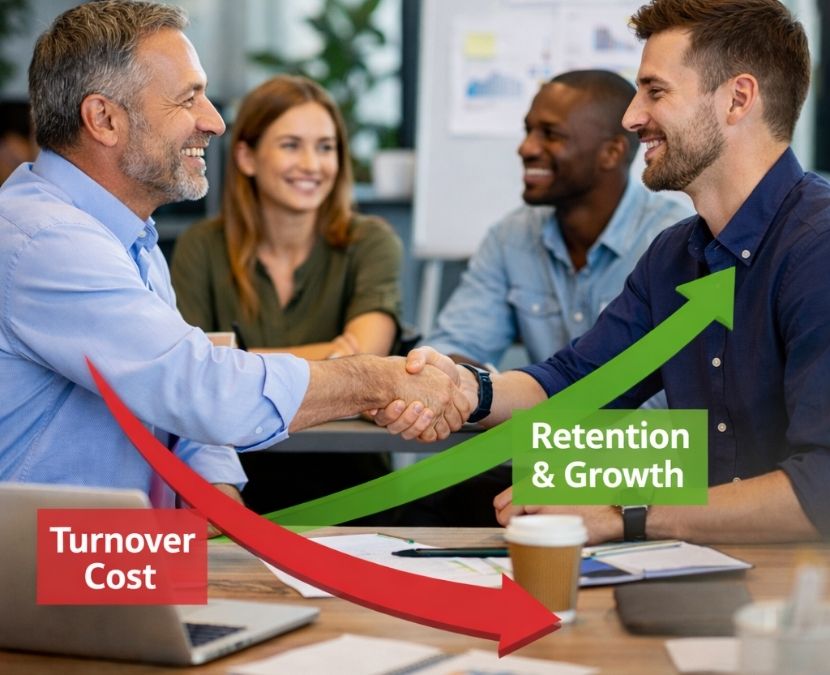
One clear sign of a growing and competitive economy is this: employee retention has become a serious concern across industries. At Central Dispatch, we see this shift firsthand. Organizations are no longer asking if retention matters, but how to address it strategically.
Retention is no longer just an HR metric—it’s a business performance issue.
What Does Employee Retention Really Mean?
Most organizations track employee turnover. In some sectors, especially high-volume or operational roles, turnover rates of 30–40% have historically been seen as “normal.” In fact, some companies have even built their operating models around frequent attrition by simplifying roles to make replacements easy.
While this approach may seem practical in the short term, it is not sustainable.
Experience consistently shows that long-tenured employees deliver significantly more value than those who frequently cycle through an organization. Every employee who stays longer builds institutional knowledge, improves efficiency, strengthens teamwork, and delivers better outcomes for customers.
The true cost of losing an employee often goes far beyond what is immediately visible on a balance sheet.
The True Cost of Employee Turnover
When an employee leaves, the impact is felt across the organization. The real cost includes:
- Recruitment expenses such as advertising, screening, interviewing, and hiring
- Onboarding and training time, including management involvement
- Lost productivity while new hires ramp up, which can take months or even years
- Reduced engagement among remaining employees who witness high turnover
- Declines in service quality and higher error rates as new employees learn processes
- Loss of training investment already made in the departing employee
- Cultural disruption, as teams question stability and leadership decisions
Most importantly, employees are not depreciating assets. They are appreciating assets. Over time, they gain deeper system knowledge, product understanding, and collaborative effectiveness—making them increasingly valuable to the organization.
The Economic Value of Employees Over Time
Early in an employee’s journey, they often represent more cost than value. With the right environment—strong onboarding, coaching, learning opportunities, and supportive leadership—employees quickly cross a threshold where they contribute far more than they consume.
Retention, therefore, is about moving people up this value curve—and keeping them there.
Why Retention Has Become More Important Than Ever
- Economic growth has increased competition for skilled talent
- Employees expect visible growth, purpose, and trust
- Workplace environments have not always evolved with expectations
- Leadership styles sometimes lag behind workforce motivations
- In many markets, demand for capable employees exceeds supply
High-performing organizations consistently demonstrate one common trait: they take care of their employees with the same discipline and intention that they take care of their customers.
Rethinking Retention: A System, Not a Single Fix
Retention is rarely driven by one factor alone. Compensation, job fit, career growth, leadership, and culture all interact. Employees want to feel valued, challenged, respected, and proud of the work they do.
Building a Retention-Focused Organization
Strong retention does not happen by accident. It requires deliberate leadership, thoughtful hiring, continuous development, and a culture of respect and trust.
In today’s fast-moving economy, organizations that invest in engagement and growth will not only retain their people—they will outperform those that don’t.