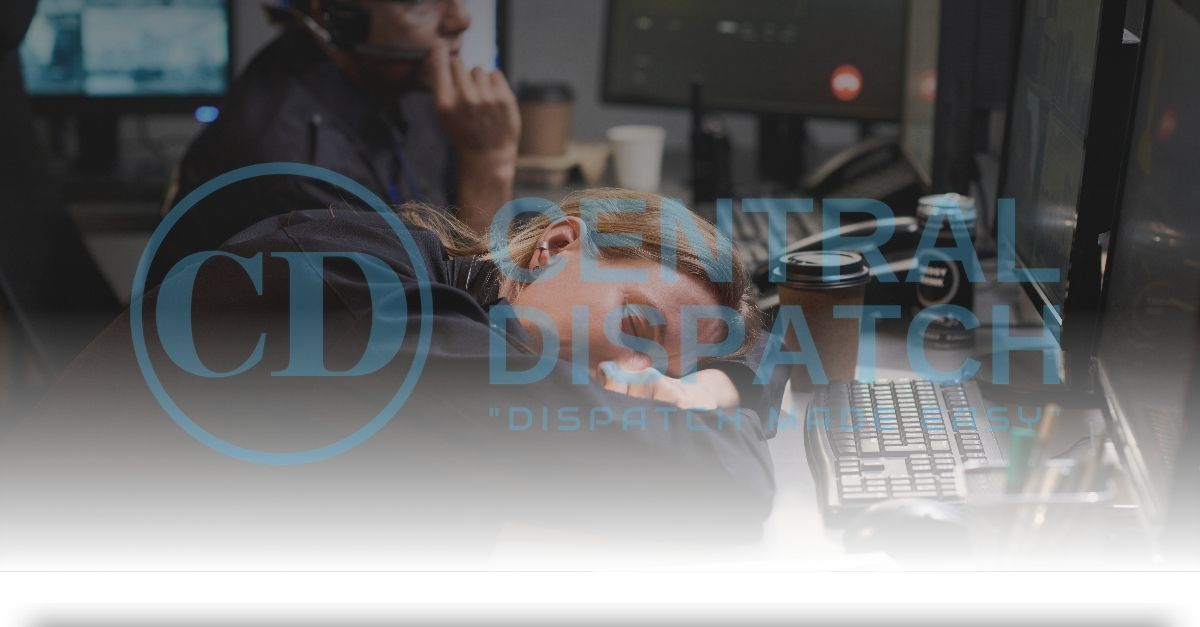
Executive Summary: Preventing Handoff Failures in Oilfield Logistics
- The Core Problem: Shift transitions at 06:00 and 18:00 represent the highest-risk operational windows for oilfield haulers, leading to dropped run tickets, untracked high-level SCADA alarms, and excessive saltwater disposal (SWD) demurrage.
- Direct Financial Impact: Uncoordinated shift handoffs average 1.5 to 3 hours of wasted truck dwell time daily per driver, multiplying deadhead miles and triggering avoidable detention penalties across high-volume basins.
- Standardized Protocols: High-performing carriers enforce synchronized digital logs, mandatory 15-minute voice overlap briefings, real-time driver Hours of Service (HOS) audits, and active production battery tank monitoring.
- The Remote Solution: Leveraging specialized oilfield dispatch services eliminates the overhead of managing exhausted in-house night shifts, providing scalable, fixed-cost oilfield dispatching with uninterrupted 24/7 operational continuity.
Every oilfield trucking carrier running fluid haul operations across the Permian, Bakken, or Eagle Ford knows the operational crunch of 06:00 and 18:00. Day shift meets night shift. Drivers line up on lease roads waiting on tank battery access, production water tanks trip high-level alarms, and dispatchers rush to pass along half-completed haul sheets before clocking out.
In oilfield transport, a fractured handoff does not just cause a minor scheduling delay—it cascades into unbilled detention hours, missed barrels, furious lease operators, and thousands of dollars in lost revenue. When shift coordination breaks down, the owner absorbs the cost every single time.
Mastering oilfield shift handoff protocols and integrating dedicated fleet dispatch coordination protects fleet margins, maintains tight driver retention, and ensures field operations never drop a load between shift turns.
“Reliable oilfield dispatch services keep fluid haul operations synchronized when production spikes, tank battery levels climb, and drivers rotate between shifts—preventing costly demurrage and protecting every billable barrel.”
The Financial Anatomy of a Failed Shift Transition
When an in-house dispatcher clocks out after an exhausting 12-hour tour without executing a systematic handoff, operational blind spots emerge instantly. Communication slips, open ticket queues stall, and oncoming controllers struggle to regain situational awareness.
The Ripple Effect of Broken Handovers
Day Dispatcher Departs
Shift ends abruptly with unlogged tank alarms, pending driver questions, and loose paper run tickets.
Night Shift Blindness
Incoming dispatcher scrambles to verify driver locations, gate codes, and active customer priorities.
Misrouted Trucks
Vacuum units dispatched directly into backlogged SWDs or tanks already pulled by another driver.
Unbilled Demurrage
Drivers burn off-duty hours in disposal queues; split loads remain unrecorded on final accounting sheets.
1. Unmonitored Saltwater Disposal (SWD) Wait Times
If a day dispatcher tracks a 90-minute wait at an offload disposal facility but fails to log that bottleneck before leaving, the incoming night dispatcher sends three additional vac-trucks directly into the same bottleneck. The result: hundreds of dollars per truck in avoidable demurrage, stalled barrel movement, and hours burned off drivers' electronic logging devices (ELDs).
2. SCADA High-Level Alarms and Spills
Production never pauses for a shift change. If a day dispatcher receives an automated supervisory control and data acquisition (SCADA) alert for a gathering battery approaching 85% capacity and neglects to verify the reroute with the incoming shift, tanks risk overfilling. Emergency callouts carry heavy operator penalties, and missed barrels tarnish carrier reputations.
3. Run Ticket Reconciliations and Lost Revenue
A driver unloads crude or condensate at an injection station, snaps a photo of a handwritten run ticket, and texts it to a dispatcher walking out the door. If that ticket never makes it to accounting or dispatch billing records, the cash flow cycle breaks down. Unlogged run tickets lead to disputed billings, unbilled split loads, and prolonged payout cycles.
4 Critical Shift Handoff Protocols for Fleet Operations
To protect transport margins, carrier operations must implement standardized oilfield shift handoff protocols that eliminate guesswork between shift rotations.
Protocol 1: Enforce a Mandatory 15-Minute Voice Overlap
Digital tools are essential, but they cannot replace a live verbal review between departing and oncoming dispatch controllers. A non-negotiable 15-minute voice overlap ensures context is conveyed clearly:
- Which lease gates have locked combinations changed by the pumper?
- Which secondary washouts or wet caliche roads need to be avoided tonight?
- Which specific drivers are approaching their 14-hour duty windows and need close-in drop destinations?
Protocol 2: Implement a Centralized, Live Fluid Manifest
Spreadsheets saved locally on an office desktop create information silos. All truck allocations—whether hauling crude, produced water, flowback, or drilling mud—must live within a cloud-based dispatch management system updated continuously:
- Driver name, tractor/trailer number, and exact geofence location.
- Load status: Dispatched, En Route to Battery, Loading, Rolling to Disposal/LACT unit, Offloading.
- Barrel counts (bbl), API gravity readings, and sediment & water (S&W) cuts.
Protocol 3: Run Proactive SCADA Tank Monitoring and Auditing
Modern energy transport relies on automation. Implementing proactive SCADA tank monitoring and auditing allows dispatchers to watch battery levels in real time across multiple operating accounts.
Incoming dispatchers must log in 10 minutes prior to shift start, survey all monitored tank levels, verify which batteries are within 4 hours of critical high-level shut-in, and match those tanks against assigned truck capacity.
Protocol 4: Map Driver Hours-of-Service (HOS) Exhaustion Points
Nothing drains dispatch efficiency faster than sending a driver to pull a load 45 miles out on a rough caliche lease road, only for them to run out of drive time while standing in an offload line.
Shift handovers must include an audited roll call of remaining drive and on-duty time for every active unit, ensuring long hauls are assigned strictly to fresh drivers starting their shifts.
Streamline Your Fleet with Fixed-Cost Remote Dispatch
Managing internal round-the-clock dispatch teams is expensive and prone to high turnover. Central Dispatch delivers dependable 24/7 remote truck dispatching designed specifically for high-tempo oilfield transport. Protect your fleet from expensive handoff gaps with dedicated logistics specialists working on a predictable, fixed-cost basis.
In-House Dispatch vs. 24/7 Remote Dispatching: Direct Operational Comparison
Managing an internal 24/7 dispatch room requires round-the-clock management, expensive overtime, employee benefits, and continuous recruiting to combat night-shift burnout. The comparison below outlines the operational realities of internal staffing versus partnering with fixed-cost oilfield dispatching professionals:
| Operational Metric | Traditional In-House Dispatch Team | Central Dispatch Remote Solution |
|---|---|---|
| Monthly Fixed Overhead | High and volatile (Base salaries + overtime + payroll taxes) | Predictable, cost-effective flat monthly investment |
| Night & Weekend Coverage | Prone to call-offs, unmonitored shifts, and high turnover | Fully staffed, uninterrupted 24/7/365 active desk monitoring |
| Shift Handoff Consistency | Fragmented; dependent on individual employee discipline | Standardized SOP handovers with cross-shift log auditing |
| SCADA & Tank Monitoring | Often neglected during late-night shift gaps | Continuous automated tank monitoring and proactive dispatching |
| Recruiting & Training Costs | Constant cost center due to high industry churn | Zero onboarding, training, or benefit overhead for the carrier |
| Driver Communication Support | Delays during shift turnovers and peak dispatch rush | Dedicated, responsive real-time fleet and driver communication |
| Scalability Across Basins | Requires hiring additional personnel for fleet expansions | Scales immediately with your asset count and hauling demands |
SCADA Tank Monitoring & Dispatch Auditing: Eliminating Run-Ticket Revenue Leakage
In high-tempo oilfields, hauling fluids without integrating SCADA data into dispatch workflows introduces unnecessary financial risk. SCADA integrations bridge the gap between production pumpers and field logistics:
1. SCADA Monitored Tank Level Signals High-Level Warning
Automated telemetry alerts our 24/7 operations room when crude or produced water storage hits 80% to 85% capacity, before well shut-ins occur.
2. Automated Dispatch Routes Closest Driver with HOS Cap
Controllers check real-time GPS coordinates and verified ELD clocks to dispatch a qualified tractor-trailer without violating driving limits.
3. Digital Run-Ticket Captured via Mobile Terminal
Driver logs gross barrels, net barrels, observed gravity, temperature, and BS&W cuts immediately upon offload at the LACT unit or SWD facility.
4. Shift Auditor Verifies Billable Volume vs. Ticket Pic
Dispatch auditing matches field ticket scans against dispatched orders, resolving discrepancies before transmitting clean packets to billing.
This closed-loop system protects carriers from three major financial risks:
- Closing the Loop on Produced Water: When a saltwater tank hits an 80% threshold, dispatchers receive automated alerts, queue the haul, assign the closest driver with compliant HOS limits, and confirm delivery before the next shift rotation begins.
- Eliminating Disputed Run Tickets: Missing or illegible run tickets delay billing cycles for weeks. Dispatch auditing verifies tickets directly against driver field submissions—validating gross barrels, net barrels, observed temperature, gravity, and BS&W percentages before filing them for customer invoicing.
- Optimizing Turn Times: By monitoring queue lengths and disposal capacities across regional SWD facilities, dispatchers redirect trucks in real time away from congested sites toward open, efficient stations.
Real-World Case Example: Eliminating Demurrage in the Delaware Basin
A mid-sized liquid transport fleet running 22 vacuum trucks across the Delaware Basin faced chronic late-night dispatch bottlenecks:
- Driver detention at disposal stations averaged 1.8 hours per truck per night, resulting in costly demurrage payouts.
- Incomplete shift turnovers between 17:30 and 19:00 led to an average of 3 to 4 forgotten customer haul orders every week.
- Dispatcher turnover on the night desk hit 70% annually, forcing operations managers to cover midnight shifts themselves.
The Operational Turnaround
By partnering with Central Dispatch to handle 24/7 fleet coordination and night-shift handoffs, the carrier restructured its field workflow:
- Standardized digital handoff manifests were audited across every shift change.
- Late-night dispatchers redirected drivers away from backed-up disposal sites using real-time route monitoring.
- The owner replaced unpredictable overtime pay with a single, predictable monthly fee.
The Bottom Line: Within 60 days, average demurrage dropped by 64%, driver retention stabilized, and unbilled run tickets were completely eliminated.
Frequently Asked Questions (FAQ)
What makes an oilfield shift handoff different from standard freight dispatch?
Oilfield hauling involves dynamic, highly volatile field variables that do not exist in dry van or flatbed shipping. Dispatchers must manage remote wellsite lease road directions, changing gate codes, hazardous materials (HAZMAT) compliance, dangerous gas safety (H2S), real-time tank battery levels, and changing wait times at regional saltwater disposal facilities.
How does remote oilfield dispatch coordinate with drivers on remote lease roads?
Remote dispatch teams utilize integrated fleet management systems, mobile communications, satellite GPS fleet tracking, and cellular-boosted logging systems. Dispatchers track truck positions, update digital load sheets, and maintain continuous contact via phone, messaging apps, and in-cab communication channels regardless of hour or location.
How does fixed-cost dispatching reduce operating expenses for trucking carriers?
Hiring an internal dispatch team requires paying hourly base wages, night-shift differentials, mandatory overtime, healthcare benefits, workers' compensation insurance, and onboarding costs. A fixed-cost remote dispatch service provides an entire team of experienced oilfield logistics coordinators 24/7/365 for a predictable flat monthly investment—eliminating overtime spikes and turnover expenses completely.
Can remote dispatchers audit run tickets and monitor SCADA systems?
Yes. Professional oilfield dispatchers interface directly with your operational software platforms and producer SCADA portals. They monitor tank battery levels, confirm offload completion, review run tickets against dispatched volumes, and catch paperwork discrepancies before tickets reach your billing department.
Protect Your Fleet Operations 24/7 with Central Dispatch
Shift handoff failures, unbilled haul tickets, and night-shift dispatch fatigue do not have to eat into your company's operating profits. Central Dispatch LLC delivers professional, round-the-clock remote oilfield dispatch solutions tailored directly to trucking carriers across the nation's most demanding energy basins. We manage your load coordination, driver communications, and dispatch auditing seamlessly—giving you full control over your logistics at a predictable, fixed cost.
Stop absorbing the cost of broken shift handoffs.